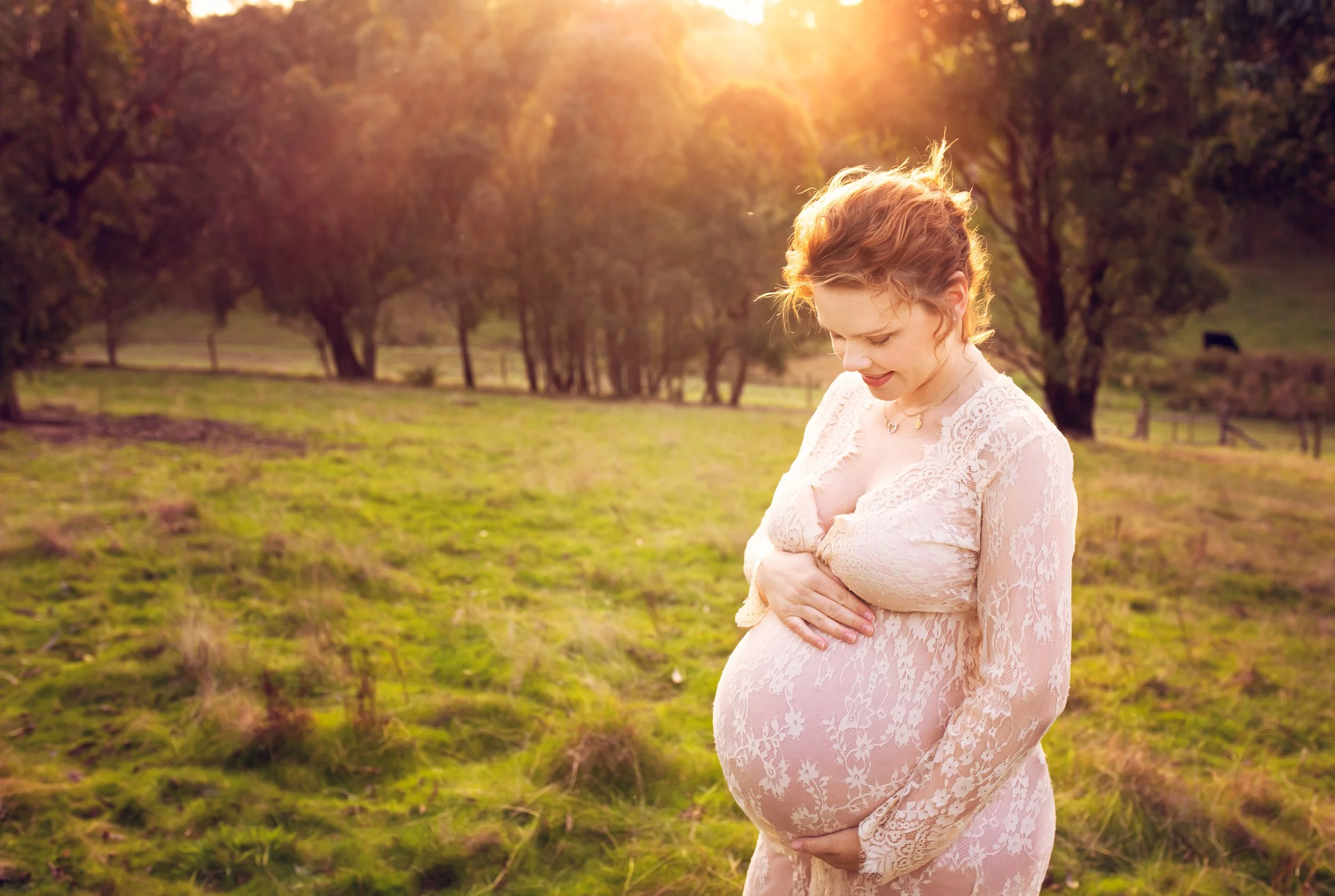
Infocus: with opera singer Rachael Jane Stellaci
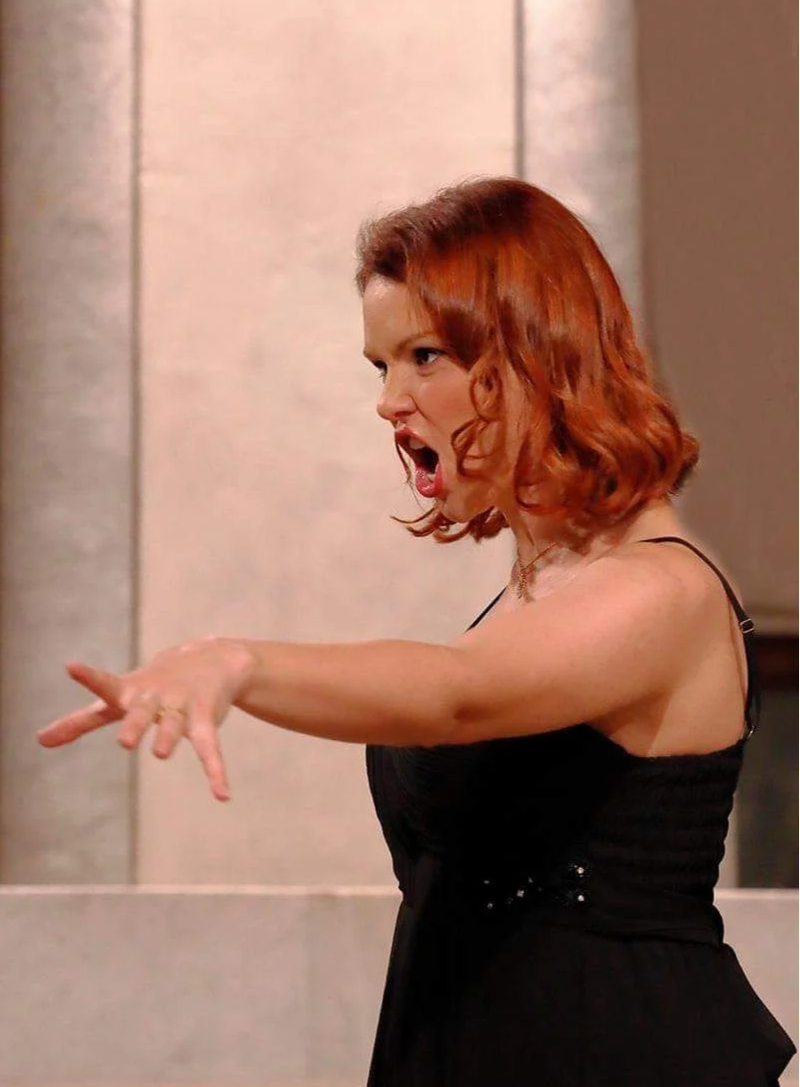
Image by Luciano Capasso
“Performing while pregnant is really special because you share that magic moment onstage with your baby and it is a really special energy”
There is something quietly radical about a woman who sings through labour. Not as a performance, not as a metaphor; literally, as a technique. Rachael Jane Stellaci is an Australian opera soprano living between two worlds - the sun-drenched chaos of southern Italy and the pull of home - and motherhood, it turns out, has made her voice better. Bigger. Darker. More herself. She'll tell you it's the rib cage opening, the pelvic floor work, the pregnancy that changed everything.
But no doubt some of it could be attributed to what happens when a woman goes through the fire and comes out still singing. Rachael talks about performing at 25 weeks, birthing across continents, the surprisingly intimate relationship between your jaw and your cervix, and raising two bilingual girls in the beautiful, maddening middle of it all.
What’s beautiful about this particular journal entry is I, Josie, was also Rachael’s doula, we shared many moments over many months and built a connection that started in pregnancy and still lives on today.
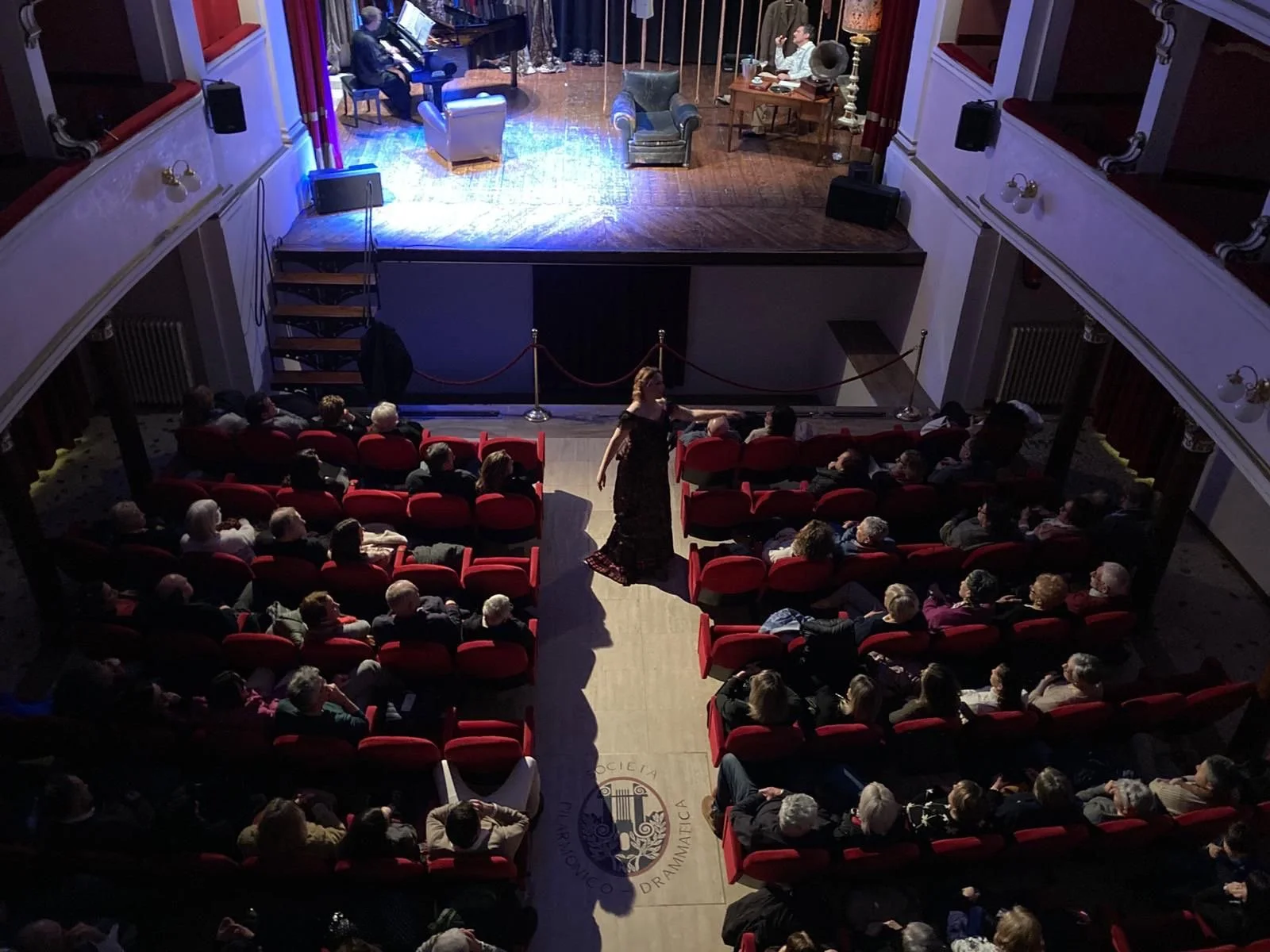
On tour in Southern Italy while 5 months pregnant with Ava
I asked, how has your relationship with your voice and body evolved through becoming a mother?
Rachael tells me her body has changed so much after two babies. After her first pregnancy — which ended at 35 weeks — the changes were minimal. No diastasis recti, and her voice came back without too much drama. But preeclampsia had brought a lot of weight and fluid, and she was honest with herself that getting back to her pre-pregnancy body wasn't really the point. She decided healthy mattered more than ‘thin’. So she focused on the swelling, and on her pelvic floor — though she admits she hadn't done much of that groundwork the first time around. It was COVID, everything was closed, and she was cobbling it together from YouTube videos like the rest of us.
Three months postpartum, when she went back to singing, something felt off. Disconnected. And here is where it gets interesting — opera singers don't use microphones. Their bodies are the instrument, the amplifier, the whole system. So when the pelvic floor and abdominal muscles aren't online, the voice wobbles. Literally wobbles. She worked slowly back with her singing teacher, rebuilding the connection between breath and body.
Her second pregnancy was a different story entirely. Bigger baby, diastasis recti, an episiotomy, and a very real worry that recovery would be harder. But this time she'd done the work — all the way to 39 weeks. I gifted her a Core and Floor Restore course and she took it seriously! When she returned to singing after Ava, her muscles were strong, her pelvic floor was functioning, and the wobble was gone. More than that — her ribcage felt more open, her diaphragmatic breathing deeper, and her voice? Bigger. Darker. Better than ever. It has changed the roles she sings.
Motherhood didn't cost her the voice. It gave her a new one.
Could you share an early experience that led to your career as a singer and why you fell in love with Opera?
“I have always loved performing and being on stage. I started ballet when I was 4 and that was how I fell in love with the theatre. I started singing in the school choir when I was in grade 3 and fall in love with music after that. I started Opera while living in Italy after I tried an Opera singing lesson by chance one day and I realised that Opera is the coming together of ballet, theatre and music and here I am today, writing these answers after singing an Opera concert in Sicily”
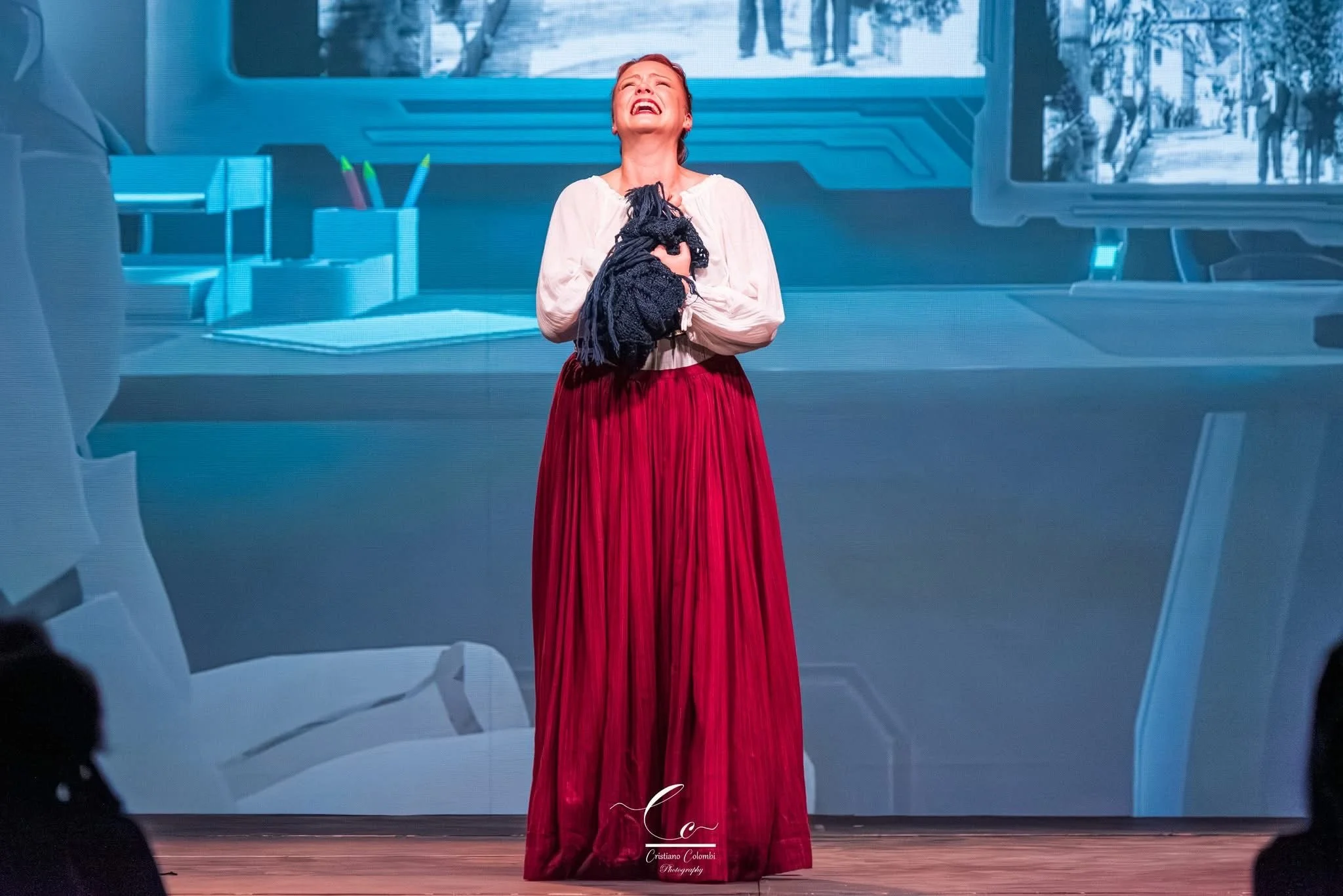
Santuzza
About daily practice and creative rhythm outside of performing. Are there rituals or habits that keep you grounded or inspired?
Outside of performing, Rachael tells me her life looks a lot like most mums. Chaos. She does the bulk of the caregiving while also needing to memorise hours of music in what sounds like genuinely minimal time — the kind of mental load that makes your eyes water just thinking about it.
She'd love more time for herself, and now that both girls are in some form of childcare, exercise is back on the radar. For now it's yoga and stretching squeezed into stolen fifteen minute windows, or workout videos with the girls who, she says, think it's great fun. On performance days she stays as quiet and still as possible, resting her voice so it's ready. The glamour of opera, it turns out, looks a lot like lying down.
Tell us about the experience being pregnant and continuing to perform, how did that play into costumes and performing?
“Performing while pregnant is really special because you share that magic moment onstage with your baby and it is a really special energy. Towards the end of my pregnancy with Ava, I was far too uncomfortable to sing and I wanted to take time off to rest. My last show was at 25 weeks after going on tour to southern Italy and a show at the theatre of Pisa. It was definitely challenging balancing performing, pregnancy tiredness and a toddler running around at home while my husband was working away from home. My body continued to change a lot too, so the amazing costume designers had to adjust all my dresses and they did a great job!”
I still remember your beautiful singing in labour, and how you used breath and vocalising as a support, what's the connection for you between the physical act of singing and the embodied experience of birthing?
“I think that singing is a very primal experience and that is why it can be so hard for people to sing in front of an audience and for professionals to master their breath work.
Our thinking brains take over and we lose connection, just like what can happen in birth! On a muscular level the mouth and lips are connected to our pelvic floor and I learned that while preparing for labour and birth. If your mouth holds tension you also will be clenching your pelvic floor.
It was fascinating to make that connection between using my abdominals, relaxing and not over using my pelvic floor and a relaxed jaw, tongue and lips as it helped me during birth but also with my singing technique.”
Can you describe what it feels like, physically and emotionally, to perform a role on stage where your voice becomes the vessel for such deep emotion?
“This is an interesting question, because as Opera singers we interpret these intense stories and they are extremely emotional. Many of my characters die a tragic death or are the evil characters that cause death to befall others. We have to balance maintaining technique and expressing emotion because the technique is so essential; we cannot fully give way to the emotion of the piece. We follow a conductor and honor the music the composer has written, so we have to have half of our brain counting and following the baton while the other half expresses the emotion and what is happening to our character. There are some roles that make me tear up like Madame Butterfly or Santuzza from Cavalleria Rusticana. There is always a part of me that cannot completely let go to enable me to concentrate on my role up on the stage. I think that if I let myself completely go, I might get swept completely away with all that intensity!”
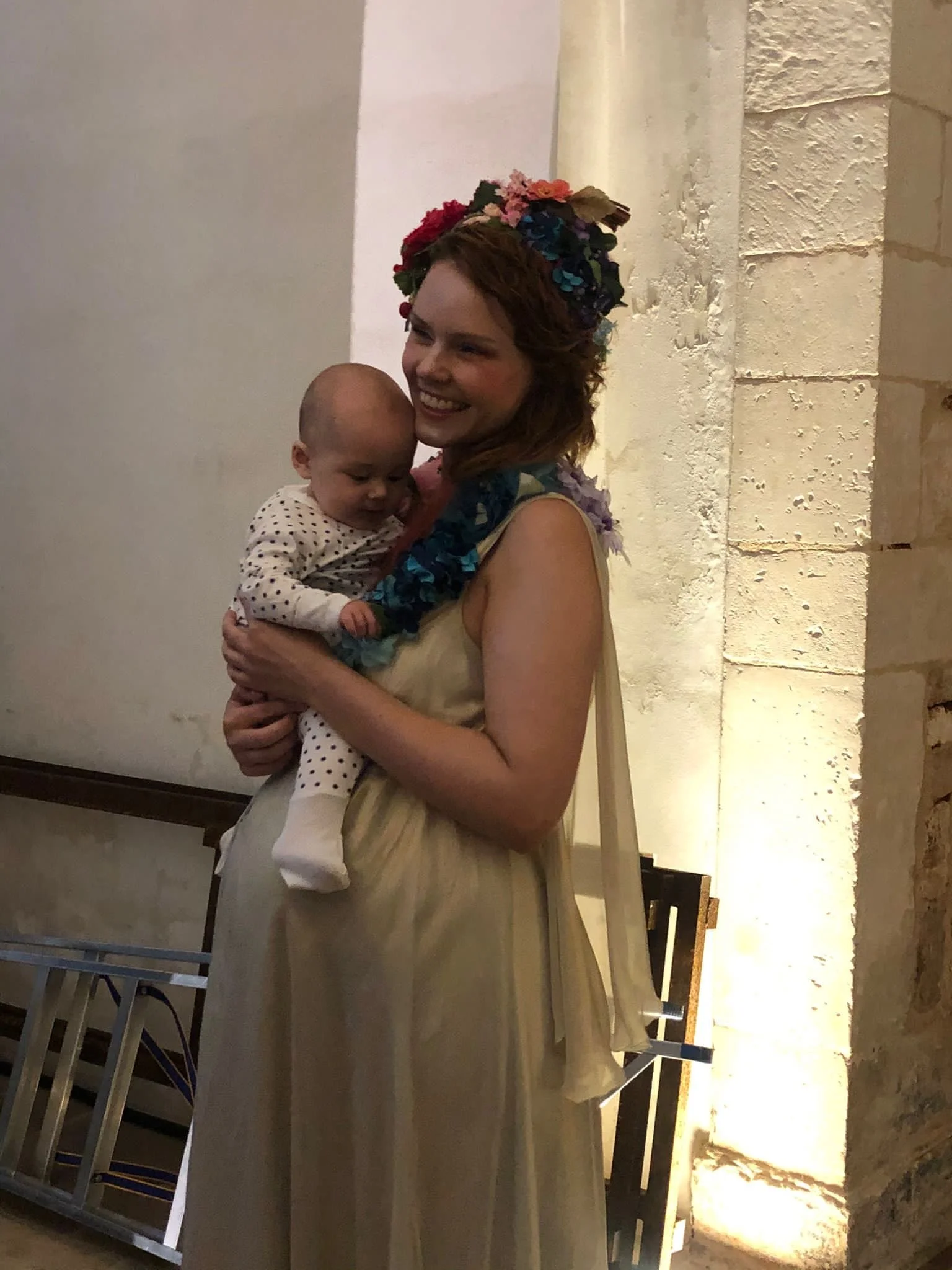
Sofia and I backstage
Finish this sentence. When people say that they can't sing, I say...
"No!" she says. "You just need to learn to breathe properly and use your support muscles." The same ones, she points out, that you use when giving birth — and we seem to manage that. She gets a little wistful talking about it. Once upon a time people gathered and sang together, told stories through music, and it was just part of being human. Somewhere along the way the Western world lost that spontaneity, that unselfconsciousness around song. She thinks that's the real reason people believe they can't sing. Not talent. Just disconnection.
Living between cultures - Australia and Italy - how has this duality shaped your identity, both personally, raising kids and creatively?
I moved to Italy when I was 20 years old, now I am 38 - so it has been a long time. That being said, I feel that deep down my heart belongs in Australia and I think that became really clear when I had children and I wanted to give them a childhood like I had.
She laughs telling me about the wet hair. In southern Italy, letting your kids run around barefoot and damp is basically a crime (ha!)— everyone she met was utterly convinced it will make them sick, and the cultural gap between that belief and Rachael's nonchalance was wide enough to drive a pram through. She felt the distance of it acutely, especially in those tender early days of new motherhood when you're already so far from your own sense of solid ground. Giving birth to Sofia in Italy wasn't a great experience, and she's honest that she really missed home during that transition — that particular ache of becoming a mother far from the people who mothered you.
And yet. Italy has also shaped her in ways she couldn't have anticipated. It makes you tough, she says. Resilient. Resourceful. You learn to fight for what you want because nothing comes easily. But then there's the other side of it — the long summers, the food, the complete lack of judgment around children existing in public at all hours. Babies at bars, kids at the park at midnight, toddlers welcomed everywhere without a second glance. That part she loves.
You are a frequent traveller and flyer both for work and to spend time with family and friends. What are the biggest things you've learned about travelling with young kids.
“I think you have to not care about what other people think. More often than not people aren’t actually looking at you and judging. Every trip is different but my main tips are: stickers and more stickers, snacks and more snacks and baby wearing especially if you are travelling solo. Booking lounge access, so you can have a shower after the long leg of your trip; that can really make a difference. And, you can often get the kids a plate of hot pasta; which is magic for my pasta loving kids!
How do you juggle mothering and working as a performance artist?
“The best I can, which some days is better than others. I need help, and that’s okay, not having family close by has meant circling in babysitters and au pairs which has been a game changer for our family in making everything be able to happen“
That help, she tells me, has been quietly transformative — not just logistically but for her mental health. It's not always about the hours covered or the childcare itself. Sometimes it's just having another person in the house, someone to share a cup of tea with at the end of a long day. That small thing, she says, makes a real difference. She'd recommend it to anyone working the kind of irregular hours that daycare simply wasn't designed for.
Sleep, too, is non-negotiable. Her voice depends on it in a way that most jobs simply don't demand. So when the girls are napping or at kinder, she's not cleaning the house. She's in bed. And she's made her peace with that.
What is your favourite role or song that you've ever performed?
“My favourite role is Turandot by Puccini. I love to sing the villain roles because I really get to be someone that I am absolutely not in real life. It is fun to play with that darker side of a character and it’s also really challenging vocally and I loved all her icey high notes”
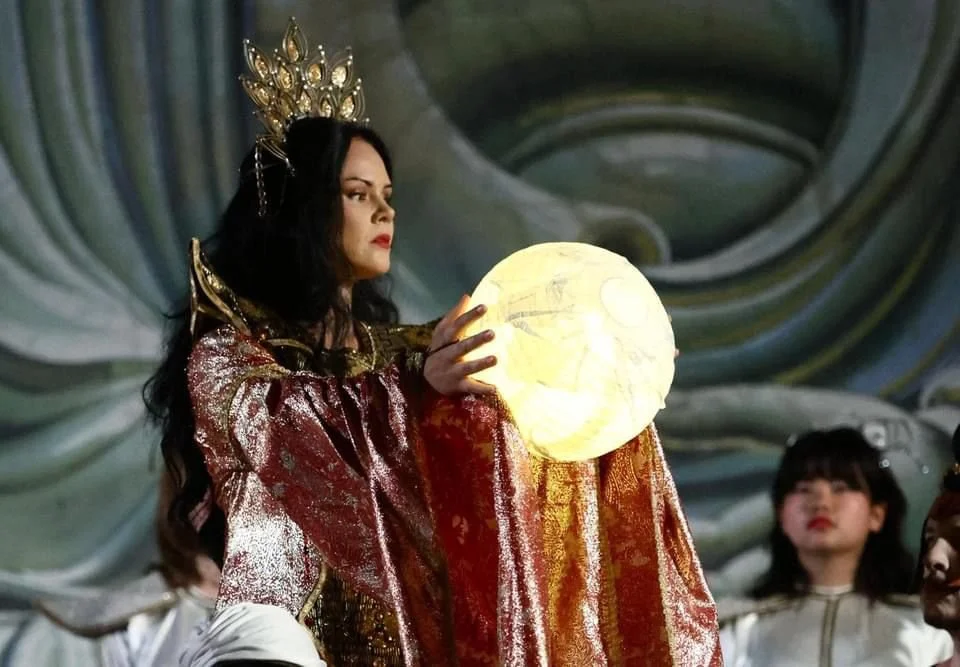
Turandot
What languages are spoken in your home?
"We speak Italian and English at home," she says, "but my husband's family speak Barese dialect — which honestly goes right over my head." She smiles saying it. More than anything she'd love her girls to find their way to it one day, to have that thread back to their family and carry something so particular, so rooted in place, forward with them.”
What motivated your decision to return to Australia for your second birth, and how did having your mother and a doula present shape that experience?
“My husband was deployed to Lebanon when I was 3 months pregnant, and with that I decided it was the perfect time for me to go home. I had a toddler to look after, and I knew I couldn’t do it alone; and I really didn’t want to be alone.
I also had a traumatic first birth and a terrible stay in special care and I hoped for my second birth to be a healing and beautiful experience. I knew that wouldn’t be the case for me without my family, so I moved home with my parents for 6 months.
My Mum, Jane and doula, Josie were my dream team. I am so glad I made the decision to engage a doula because it made such a difference for me and my journey. Josie helped me prepare and educate myself so I could advocate for what I wanted and she was physically there for me during Ava’s birth when Mum needed to rest or it was too much.
I remember leaning on Josie with all my weight during transition and her squeezing my hand so hard when Ava had a shoulder distocia that needed help to be resolved. She gave me a lot of strength in a time I needed it and my Mum gave me all her love as she watched her daughter go through the pains and depths of labour.
It was a beautiful experience even though it was far from the perfect birth”
Finish this sentence. To be a mother is to….
…love unconditionally.
Follow Rachael’s Journey here: